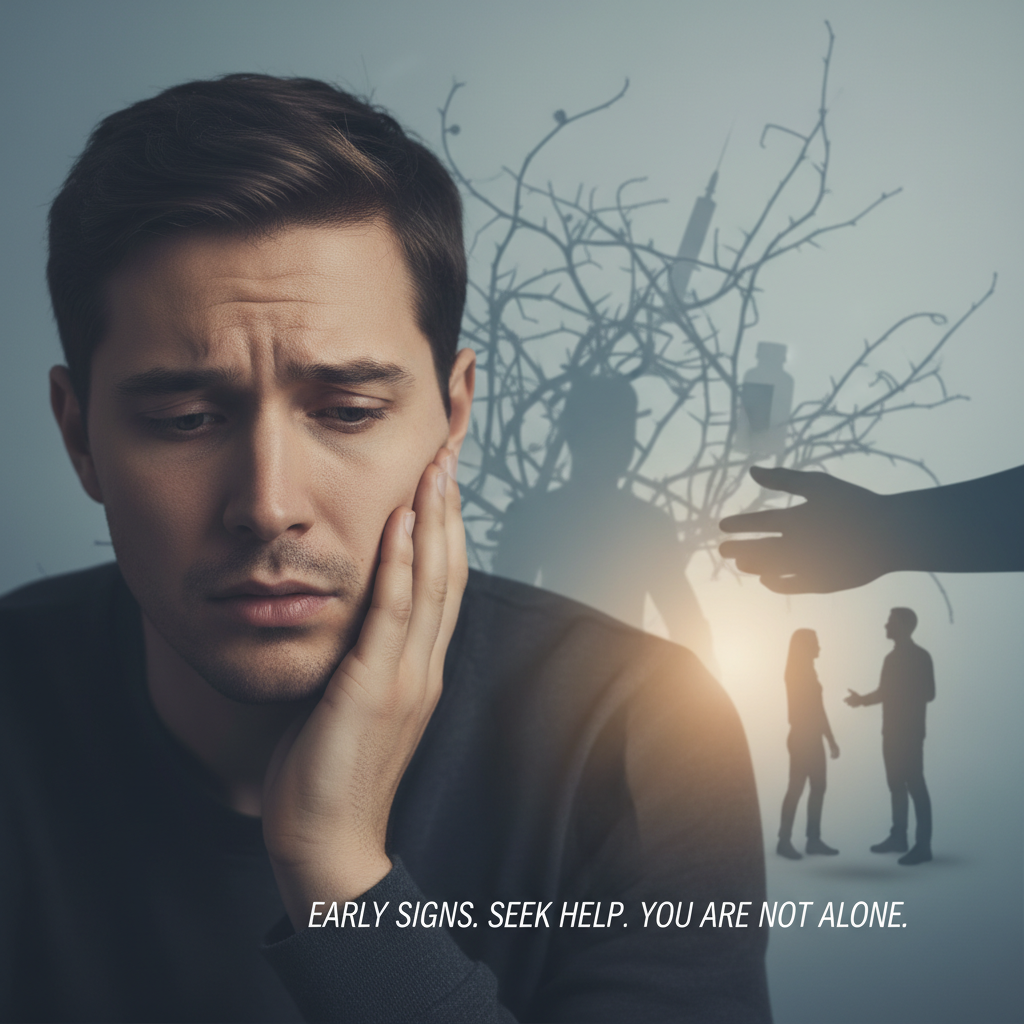
Why early signs of substance abuse matter
Noticing early signs of substance abuse in yourself or someone you care about can feel confusing and unsettling. You might wonder whether what you are seeing is typical stress, normal mood swings, or the beginning of a more serious problem.
Substance use often starts small. It may begin with experimental or social use and progress to more frequent use over time, or it may develop from prescribed medications like opioid painkillers that are used in higher and higher doses to get the same effect [1]. The earlier you recognize troubling patterns, the more options you have to interrupt them and prevent long‑term harm.
By learning to spot early warning signs, you give yourself a better chance to respond calmly and effectively. You can seek an evaluation, ask direct questions, or reach out to professionals for guidance rather than waiting until the situation becomes a crisis. This article will help you understand what to look for, how to tell if it might be more than stress, and when to reach out for support.
How substance use problems typically develop
Substance use problems rarely appear overnight. They usually unfold in stages, and early shifts can be subtle.
In many people, substance use begins as occasional, social, or experimental. A person may drink or use drugs with friends, take a prescription medication as directed, or rely on substances to unwind after a stressful day. Over time, use can quietly move from “choice” to “habit” and then toward dependence.
You might notice that:
- The person needs more of the substance to feel the same effects
- Substance use happens more days of the week or starts earlier in the day
- Attempts to cut back lead to irritability, strong cravings, or feeling physically unwell
As tolerance grows, individuals often require increasingly larger doses to achieve the desired effect and may experience withdrawal symptoms, such as intense cravings or physical illness, when they try to stop [1].
Understanding this progression can help you recognize that repeated “small” warning signs may be part of a bigger pattern. If you want a broader overview of how these patterns emerge, you can also explore how addiction starts behaviorally in more detail at how addiction starts behaviorally.
Behavioral warning signs to watch for
Behavioral changes are often among the earliest and most visible signs of substance abuse. You may see shifts in how you or your loved one acts at home, work, or school long before you notice clear physical symptoms.
Common early behavioral signs include:
- Pulling away from family or long‑time friends
- Spending more time alone or with a new group that seems to normalize heavy use
- Breaks in routine, like missing work, skipping classes, or frequently being late
- Unexplained rule breaking, lying, or increased secrecy about daily activities
In teenagers, research has found that frequent changes in friends, withdrawal from family activities, breaking curfew, and unusual or violent behavior over small issues can all be early indicators of substance use [2]. In adults, similar shifts can appear as conflict at home, ignoring responsibilities, or suddenly losing interest in hobbies or relationships that used to matter.
You might also notice risk‑taking behaviors that do not fit the person’s usual personality, such as driving under the influence, unsafe sex, or legal problems that emerge around the same time as other changes. Over time, neglecting responsibilities and ongoing risky behavior can mark a transition from experimentation to a more entrenched substance use problem [3].
If you are trying to sort out whether these shifts might point to a substance problem or another mental health concern, you may find it helpful to read more about behavior changes linked to mental illness and how to identify behavioral health issues.
Emotional and psychological red flags
Emotional and psychological changes often appear alongside early substance use, but they can be easy to dismiss as stress, “just a phase,” or personality changes.
Early warning signs can include:
- Increased irritability or anger over minor issues
- Noticeable mood swings within a short period of time
- More frequent episodes of anxiety, agitation, or restlessness
- Periods of low mood, hopelessness, or tearfulness
Recovery specialists note that erratic, unpredictable, and manic behavior can be common early signs of addiction, especially when they appear without a clear explanation [4]. Research has also highlighted mood instability, crying spells, alienation from previous interests, and dramatic behavior as emotional signals that may accompany teen substance use [2].
Substance use can also affect thinking. You may notice poor judgment, increased impulsivity, or difficulty making decisions. Over time, psychological impacts can include higher levels of anxiety, depression, aggression, social withdrawal, and loss of motivation [3].
Because these symptoms can also appear in mood and anxiety disorders, it is important not to jump to conclusions. Learning more about the warning signs of depression in adults, early symptoms of anxiety disorders, and early warning signs of mood disorders can help you understand the different possibilities and why a professional evaluation is so valuable.
Physical signs and changes in appearance
Physical changes can be more obvious, but they may show up later or be easier to misinterpret. Some signs look like ordinary illness or exhaustion at first.
Depending on the substance, you might notice:
- Bloodshot eyes, dilated pupils, or very small “pinpoint” pupils
- Sudden weight gain or weight loss with no clear cause
- Declining hygiene, body odor, or overall neglect of appearance
- Unusual smells on breath, clothing, or hair
- Tremors, slurred speech, or unsteady movements
Clinical reviews of teen substance use have also pointed to poor hygiene, visible needle marks, and other unexplained physical changes as important early indicators [2]. In adults, similar patterns may emerge along with sleep disruption, changes in appetite, or frequent minor illnesses.
While no single physical symptom proves substance abuse, a combination of physical changes along with behavioral and emotional shifts should prompt you to take a closer look. Noticing patterns over time is more important than focusing on one isolated incident.
Relationship and social changes
Substance use almost always affects relationships, even in the early stages. You may see more conflict, more distance, or both.
Some early relational warning signs include:
- Increased arguments with family members, partners, or close friends
- Pulling away from long‑term relationships in favor of people who use heavily
- Appearing defensive or hostile when someone asks simple questions about activities
- Canceling plans or avoiding social situations that do not involve substances
Changes in relationships, such as increased conflict or withdrawal from social connections, can be relational signs that a loved one is struggling with addiction [4]. You may also notice that trust begins to erode, often due to secrecy, half‑truths, or broken promises.
In teens, frequent changes in friend groups and pulling away from family routines are especially important to note [2]. In adults, similar patterns may show up as avoiding long‑time friends, isolating after work, or spending most free time in settings where heavy use is common.
If you are unsure whether these changes signal substance use, another mental health condition, or intense stress, you might find additional context in resources about mental health red flags in adults and how to tell if someone needs mental health help.
Specific concerns in teenagers and young adults
It can be especially hard to recognize early signs of substance abuse in teenagers, because many warning signs overlap with typical adolescent moodiness and experimentation. Even so, research points to patterns that deserve your attention.
Possible early indicators in teens and young adults include:
- Sudden struggles in school, dropping grades, or skipping classes
- New secrecy about where they are going and who they are with
- Unusual or intense anger when confronted about small issues
- Loss of interest in sports, clubs, or hobbies they previously enjoyed
Experts note that early signs of substance abuse in teenagers may be difficult to distinguish from normal anxiety or mood shifts, but ongoing changes in behavior or mood that suggest drug use should be taken seriously [1]. Other red flags include withdrawal, frequent curfew violations, and aggressive or manipulative behavior alongside declining performance at school [5].
Teens may also be more vulnerable due to peer pressure, casual experimentation, and the glamorization of substance use in media [6]. Open, calm, and non‑judgmental conversations can make it more likely that a young person will talk honestly about what is happening.
If you are trying to decide whether a teen’s behavior is a phase or a sign that more help is needed, it may help to compare what you are seeing with early signs of mental health issues and how to recognize substance use problems early.
Differentiating substance abuse from stress or mental illness
Stress, mental health conditions, and substance use can look very similar from the outside. Fatigue, irritability, sleep problems, and trouble concentrating can appear in all three. In many people, these issues overlap, which can make the picture even more confusing.
To start sorting things out, you can ask yourself a few questions:
- Do symptoms appear or worsen in connection with known substance use?
- Are there long stretches of time with no use where the symptoms improve?
- Has there been a recent major stressor that could explain short‑term changes?
- Are there signs of independent depression, anxiety, or mood problems that started before any use?
Drug addiction can be more likely and potentially develop more quickly with certain substances, such as opioid painkillers, and risk is affected by age, sex, and economic factors [1]. At the same time, mental health disorders can also appear on their own or alongside substance use.
For example, chronic stress might lead to sleep problems and irritability, while a mood disorder could cause extended periods of low energy or hopelessness. Resources on the difference between stress and mental illness and how behavioral health issues develop can help you understand how these conditions emerge over time.
Because there is so much overlap, you do not need to have a complete explanation before seeking help. A mental health or addiction professional can evaluate all of these factors together and help clarify what is going on.
When to consider professional help
You do not have to wait for a clear “bottom” or a severe crisis to reach out. Early identification of substance abuse is crucial for effective intervention, and specialists encourage people to seek support as soon as they see consistent warning signs [3].
It may be time to seek a professional evaluation if you notice that:
- Substance use is causing problems at work, school, or home
- There are repeated efforts to cut back or quit that do not last
- You or your loved one use substances to cope with emotions most days
- Relationships, responsibilities, or health are being damaged by use
- There are signs of both substance use and significant mental health symptoms
You can start by talking with a primary care provider, a mental health clinician, or an addiction specialist. If you are unsure whether it is the right time, reviewing resources like when to seek help for mental health, how to tell if therapy is needed, and mental health symptoms that should not be ignored may help you feel more confident taking the next step.
In some situations, especially if there are signs of withdrawal, self‑harm, or medical complications, more urgent assessment is appropriate. Do not hesitate to contact emergency services or a crisis line if you are worried about immediate safety.
Practical steps you can take now
If you are seeing early signs of substance abuse, you may feel pressure to fix everything at once. It can be more helpful to focus on a few concrete steps.
You might:
-
Track what you notice over time
Write down concerning behaviors, emotional shifts, and physical changes with dates. Patterns across days or weeks can be more telling than any single event. -
Start a calm, specific conversation
Choose a time when everyone is relatively calm. Describe what you have seen using specific examples, avoid labels, and express concern rather than blame. -
Separate the person from the behavior
Communicate that you care about the person and that your concern is about the changes, not their character or worth. -
Offer support in seeking help
Suggest an appointment with a doctor, therapist, or counselor. Offer to help with scheduling, transportation, or attending the first visit together. -
Learn more about co‑occurring concerns
Because substance use and mental health issues often appear together, you may want to explore early signs of co occurring issues and how to recognize emotional distress early.
The sooner psychological, emotional, relational, and physical signs of addiction are recognized, the greater the likelihood of helping a loved one achieve a positive recovery outcome [4].
Taking small, steady steps matters. You do not need to have all the answers before you act.
Supporting your own well‑being
If you are worried about someone else, it is easy to overlook your own stress and exhaustion. Living with uncertainty, conflict, or fear about a loved one’s substance use can affect your emotional and physical health.
You can support yourself by:
- Reaching out to trusted friends, family, or support groups to talk openly
- Setting basic boundaries around safety and what you can reasonably do
- Seeking your own counseling or therapy if you feel overwhelmed or stuck
- Learning more about mental health awareness symptoms and signs of worsening mental health, especially if you notice your own mood or anxiety changing
Caring for your well‑being is not a distraction from helping your loved one. It gives you the stability and perspective you need to make thoughtful decisions, communicate clearly, and stay engaged over time.
Moving forward with information and support
Recognizing early signs of substance abuse can feel uncomfortable, but it is also a powerful opportunity. By paying attention to changes in behavior, mood, relationships, and physical health, you can identify problems before they escalate and connect yourself or your loved one with meaningful help.
You do not have to navigate these questions alone. Professional support can help you sort out whether what you are seeing reflects stress, mental illness, substance use, or a combination of all three. If you are noticing persistent warning signs, consider taking the next step by seeking an assessment, exploring how to tell if someone needs mental health help, or learning more about when to seek help for mental health.
Staying informed, asking questions, and reaching out early can make a real difference in the path ahead.