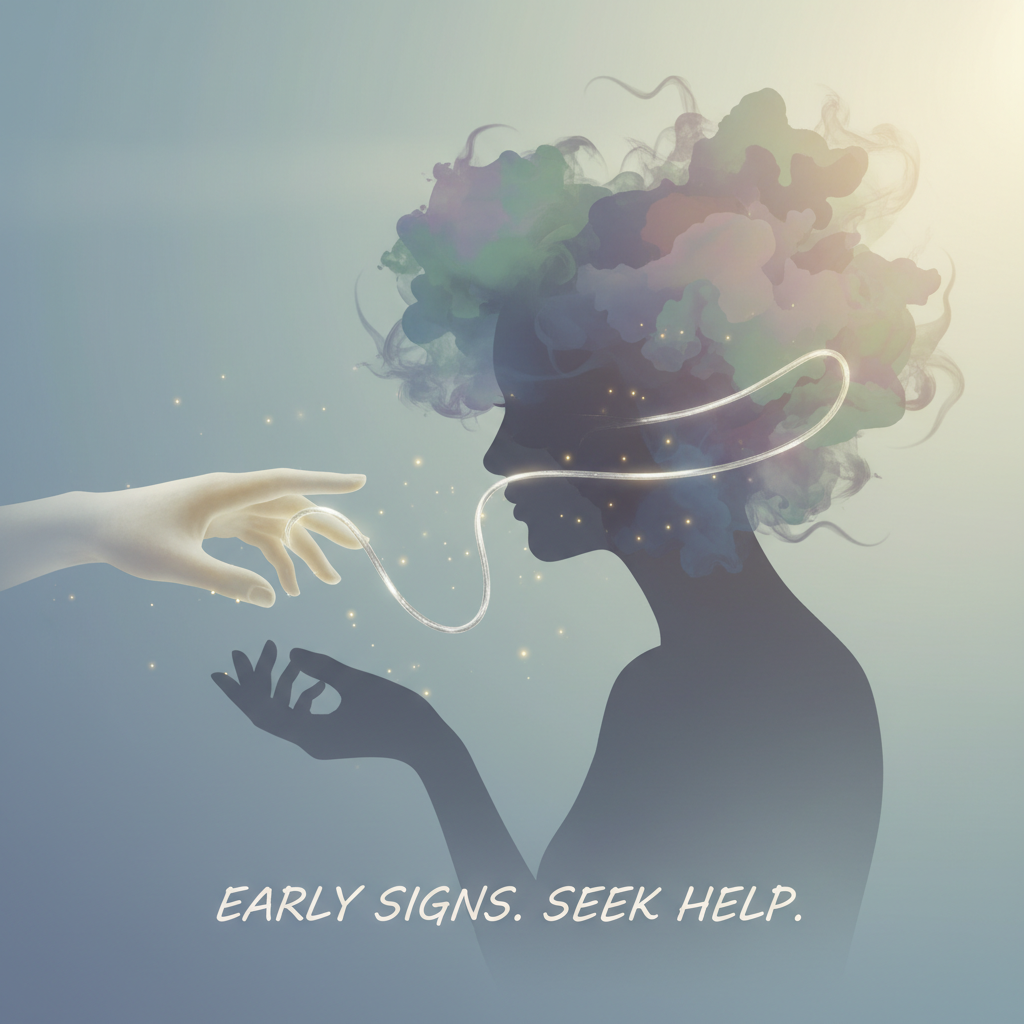
Why early warning signs matter
Recognizing early warning signs of mood disorders in yourself can feel confusing. You might wonder if you are simply stressed or going through a rough patch, or if something more serious is starting. Mood disorders like depression and bipolar disorder usually build gradually, not overnight, and they rarely get better on their own without some kind of support or treatment [1].
When you understand early warning signs of mood disorders, you can pay attention to patterns in your mood, energy, behavior, and thinking. This awareness helps you seek help sooner, which often leads to better outcomes and less disruption to your work, relationships, and daily life. It also helps you distinguish temporary stress from mental health conditions that need professional care, a topic you can explore further in the guide on the difference between stress and mental illness.
What mood disorders are
Mood disorders are conditions that significantly affect how you feel emotionally over time. Your mood may be unusually low, unusually high, or swing between the two. These shifts last for weeks or longer and interfere with your ability to function at work, in school, or at home [2].
Common mood disorders include:
- Major depressive disorder
- Persistent depressive disorder
- Bipolar disorder (types I and II)
- Cyclothymic disorder
These conditions involve more than typical ups and downs. They are characterized by extended periods of intense sadness, emptiness, irritability, or, in bipolar disorder, episodes of elevated or irritable mood, increased energy, and risky behavior [2].
Understanding the early warning signs of mood disorders helps you notice when normal emotional changes start to cross into something more persistent and disruptive. If you want a broader overview of how mental health concerns begin, you may also find it helpful to read about how behavioral health issues develop.
Early signs of depressive disorders
Depression rarely starts with one bad day. It usually builds slowly, and you might explain it away as burnout, busyness, or lack of sleep. Over time, though, certain patterns show up that suggest more than situational sadness.
According to the Mayo Clinic, early signs of depressive disorders often include [1]:
- Persistent feelings of sadness, emptiness, or anxiety
- Loss of pleasure in most or all activities
- Lower energy or constant fatigue
- Sleep problems, either difficulty sleeping or sleeping too much
- Appetite or weight changes
- Trouble concentrating, remembering, or making decisions
- Feelings of worthlessness, guilt, or hopelessness
The Cleveland Clinic notes that symptoms like sadness or hopelessness that last at least two weeks can meet an early threshold for diagnosing depression [2].
You might notice that you no longer enjoy hobbies that used to feel rewarding, or you consistently cancel plans because you feel too tired or disconnected. Others might describe you as “not yourself.” These are important mental health red flags, and you can learn more about them in depth in the resource on warning signs of depression in adults.
If you recognize several of these signs in yourself and they have lasted for at least two weeks, it is worth exploring more information on when to seek help for mental health and considering a professional evaluation.
Early signs of bipolar disorder
Early warning signs of bipolar disorder can be harder to recognize, especially because they often start with depressive episodes. This is one reason bipolar disorder is frequently misdiagnosed as depression in primary care settings [3].
The Mayo Clinic highlights early signs that may point toward bipolar disorder [1]:
- Periods of unusually elevated or irritable mood
- Increased energy, activity, or restlessness
- Decreased need for sleep while still feeling energized
- Racing thoughts and rapid speech
- Distractibility and difficulty focusing
- Impulsive or risky behavior, such as overspending or reckless driving
These “high” periods, called manic or hypomanic episodes, often alternate with depressive episodes that resemble major depression. You might experience:
- Emotional highs followed by deep lows
- Times when you feel extremely productive and social
- Later periods of exhaustion, self doubt, and withdrawal
Personal accounts from the Depression and Bipolar Support Alliance describe cycles of increased energy, sociability, and productivity, followed by phases of feeling drained, isolated, and unable to focus [4].
If you notice that your mood and energy shift in distinct phases, that you have stretches where you sleep very little without feeling tired, or that friends and family comment on sudden changes in your activity level or behavior, these could be early warning signs of bipolar disorder rather than “just stress” or “just depression.”
Changes in mood, energy, and thinking
One way to recognize early warning signs of mood disorders is to pay attention to patterns that cut across diagnosis labels. The Cleveland Clinic notes that mood disorders often involve persistent changes in mood, sleep, eating behaviors, energy level, and cognitive functions like racing thoughts or loss of concentration [2].
You might notice some of the following shifts in yourself:
- Mood: feeling sad, empty, irritable, or “flat” most of the day, nearly every day, or experiencing intense mood swings that do not match your situation
- Energy: being unusually fatigued or unusually energized for long stretches, with no clear cause
- Thinking: racing thoughts, slowed thinking, difficulty concentrating, or feeling mentally “foggy”
- Motivation: struggling to start tasks, finish work, or take care of basic responsibilities
- Hopefulness: growing feelings that nothing will improve or that your efforts are pointless
A useful way to think about this is to compare your current functioning to your usual baseline. If your motivation, energy, and mood have shifted significantly and stayed that way for weeks, it may be time to look more closely at early signs of mental health issues and consider reaching out for support.
Distinguishing stress from a mood disorder
You may wonder how to tell whether you are dealing with understandable stress or an emerging mood disorder. Stress reactions are usually tied to a specific event or period, and they tend to improve as you get rest, support, or relief from the stressor.
In contrast, mood disorders:
- Last longer, often several weeks or more
- Affect many parts of your life at the same time
- Do not fully resolve with typical self care alone
- May appear without a clear external trigger
- Interfere with your ability to work, study, or maintain relationships
For example, a stressful week at work might leave you tired and tense, but your mood lifts on days off and you can still enjoy time with friends. With a mood disorder, you might feel down or detached most days, even when nothing in particular is going wrong. You may also notice other behavior changes linked to mental illness, such as withdrawing from people, changes in performance at work or school, or uncharacteristic irritability.
If you are unsure how to evaluate your experiences, reviewing a guide on the difference between stress and mental illness can help you compare your symptoms with common patterns.
Anxiety as a warning sign or companion issue
Anxiety itself is not classified as a mood disorder, but it commonly appears before or alongside depression and bipolar disorder [2]. Early anxiety symptoms can serve as a warning sign that your mental health is under strain.
You might notice:
- Persistent worry that is difficult to control
- Restlessness or feeling “on edge”
- Muscle tension or physical discomfort
- Sleep problems, especially trouble falling or staying asleep
- Difficulty concentrating because of worry
For some people, anxiety is the first noticeable change before low mood or mood swings develop. It is also common for anxiety and depression to occur together. Paying attention to early symptoms of anxiety disorders can help you identify when normal worry is shifting into something that deserves more attention.
Anxiety can also increase the risk of using substances like alcohol or drugs to cope, which may, over time, contribute to more complex behavioral health issues.
Substance use as an early red flag
Mood changes and substance use often develop together. You might drink more, use prescription medications differently, or turn to other substances to manage low mood, anxiety, or sleep problems. While this may feel like short term relief, it can mask symptoms and make mood disorders harder to recognize.
The Mayo Clinic notes that alcohol or drug problems can be especially concerning when combined with mood symptoms because they increase the risk of suicide [1]. If you notice that you are:
- Using substances more often or in larger amounts
- Relying on alcohol or drugs to relax, sleep, or cope with feelings
- Hiding your use from others
- Feeling more irritable, depressed, or unstable after using
these may be early signs of substance abuse or indicators that substance use is making your mood symptoms worse. Learning how addiction starts behaviorally and how to recognize substance use problems early can help you see the full picture of what is happening.
When mood symptoms and substance use occur together, they are called co occurring issues. Identifying early signs of co occurring issues is important because treatment often needs to address both at the same time.
Behavioral and functional changes you might notice
Beyond mood, early warning signs of mood disorders often show up in your behavior and daily functioning. These changes can be subtle at first, but they usually become more noticeable over time.
You might see shifts in:
- Relationships: pulling back from friends or family, arguing more, feeling misunderstood or disconnected
- Work or school: missing deadlines, arriving late, losing interest in tasks, or seeing a drop in performance
- Self care: neglecting hygiene, eating irregularly, or skipping medical appointments
- Decision making: acting impulsively, taking unusual risks, or feeling unable to make even simple decisions
- Interests: losing motivation for hobbies, avoiding social activities, or feeling detached from things you used to value
Family members or close friends often notice these changes before you fully recognize them yourself. Corroborative history from caregivers or family can be crucial in detecting behavioral changes linked to psychiatric conditions [3]. Reading more about mental health red flags in adults and how to identify behavioral health issues can help you organize what you are seeing in your own life.
If you step back and your behavior, energy, and mood feel significantly different from who you usually are, and this has lasted for weeks, that shift is worth taking seriously.
Serious warning signs that need urgent attention
Some early warning signs of mood disorders signal the need for prompt or even urgent help. The Mayo Clinic emphasizes that an increased risk of suicide is an important warning sign, particularly when mood symptoms are combined with alcohol or drug problems [1].
You should seek immediate help if you notice:
- Thoughts about wanting to die, or that others would be better off without you
- Thoughts or plans of self harm or suicide
- Engaging in self injuring behaviors
- Sudden, severe mood changes, especially with agitation or aggression
- Mixing substances in dangerous ways or using them recklessly
The Depression and Bipolar Support Alliance notes that in young people, early warning signs can include hopelessness, decreased self confidence, social withdrawal, irritability, and self harm behaviors, often years before a formal diagnosis [4]. Similar patterns can appear in adults.
If you are experiencing any of these symptoms, reach out to a crisis line, emergency services, or a trusted professional right away. Resources that describe mental health symptoms that should not be ignored and how to tell if someone needs mental health help can also guide your next steps.
How to track and interpret your symptoms
Paying attention to early warning signs of mood disorders often starts with simple, practical tracking. You do not need a complicated system to get useful information.
You might:
- Keep a brief daily mood log, rating your mood and energy on a scale
- Note your sleep patterns, appetite, and key stressors
- Record any alcohol or drug use and how you feel afterward
- Ask a trusted person if they have noticed changes in your behavior or mood
Over a few weeks, patterns may become clearer. For example, you might see that your sleep has been poor for a month, your motivation has steadily declined, and you are drinking more to cope. These observations can help you recognize signs of worsening mental health and provide valuable information to a clinician.
If you feel uncertain about how serious your symptoms are, consider reviewing guidance on how to recognize emotional distress early as a next step.
When and how to seek professional help
Early recognition matters because mood disorders are unlikely to resolve fully on their own and may worsen over time if untreated [1]. Seeking help is not a sign of weakness. It is a proactive step toward protecting your health and quality of life.
You should consider reaching out for professional support if:
- Your symptoms last most days for at least two weeks
- Your mood or energy changes are affecting your work, relationships, or daily tasks
- You notice patterns that fit depression or bipolar symptoms
- You are using substances more to cope with how you feel
- You feel unsure how to manage your emotions safely
A practical place to begin is a primary care provider, a mental health clinic, or a therapist. The initial evaluation usually includes a detailed history, questions about your mood and behavior, and basic medical checks to rule out other causes of symptoms [3].
If you are considering therapy, learning how to tell if therapy is needed and reviewing guidance on when to seek help for mental health can clarify your options. For some people, outpatient counseling is enough at first. Others may benefit from more intensive care, especially when mood symptoms and substance use occur together.
Finding the right provider and treatment can take time and more than one attempt. The DBSA emphasizes that early recognition, trusting your instincts, and seeking knowledgeable support are key steps toward managing mood disorders effectively [4].
Taking the next step for your mental health
Understanding early warning signs of mood disorders gives you a clearer lens on what you are experiencing. You do not have to diagnose yourself, but you can recognize patterns that indicate it is time to reach out. Awareness of mental health awareness symptoms, along with knowledge of how to recognize emotional distress early and early signs of behavioral health issues, empowers you to act before symptoms become overwhelming.
If you see your own experiences reflected in these descriptions, consider this an invitation to pause, take your concerns seriously, and explore support. With early attention and appropriate care, many people find relief from symptoms, regain stability, and rebuild a life that feels more like their own.