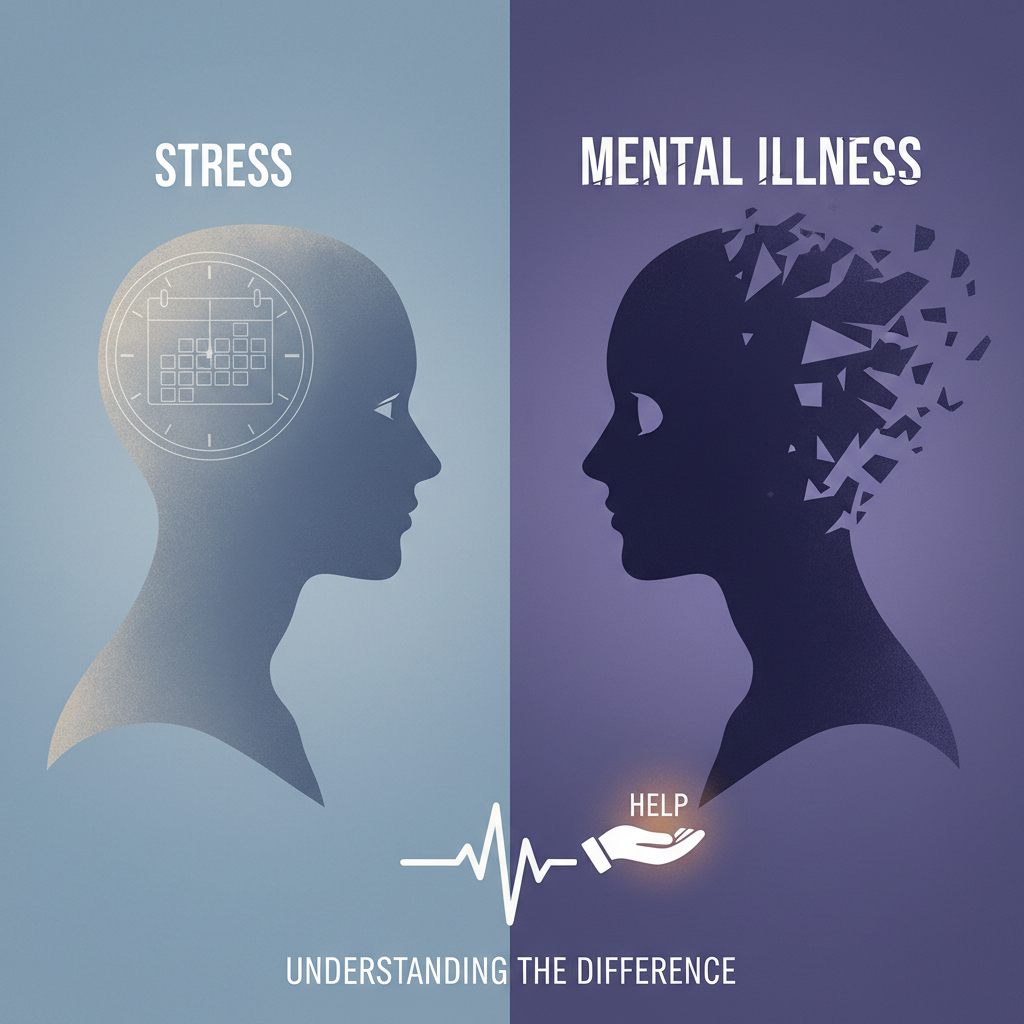
Why understanding the difference matters
When you feel overwhelmed, it can be hard to know if you are experiencing “normal” stress or the early signs of a mental health condition. Understanding the difference between stress and mental illness helps you decide when to adjust your lifestyle, when to watch more closely, and when to seek professional help.
Stress is the body’s natural response to a challenge or threat, and it is a normal part of daily life. Mental illness, on the other hand, is a medical condition that affects your thoughts, feelings, and behavior in more serious and lasting ways and often requires professional treatment to improve [1]. Recognizing the difference between stress and mental illness early can protect your health, relationships, and work or school performance.
If you are already noticing behavior or mood changes in yourself or someone you love, learning how to identify early signs can guide you toward the right kind of support. You can also explore related resources, such as how to identify behavioral health issues and how to tell if someone needs mental health help, to build a fuller picture.
What stress is and how it works
Stress is your body’s built‑in alarm system. When you sense a threat, whether physical, emotional, or even imagined, your nervous system responds with a surge of hormones that prepare you to act. This response can be triggered by work deadlines, school demands, relationship conflict, financial worries, or unresolved issues from the past [1].
In small amounts, stress can be helpful. It can motivate you to study for an exam, meet a project deadline, or solve a problem at home. Healthcare professionals often describe stress as:
- Acute stress, short term, tied to a specific event, like an argument or an upcoming presentation
- Chronic stress, long term, ongoing pressure that does not ease, such as caregiving strain or financial insecurity [2]
Acute stress usually fades once the situation is resolved. Chronic stress is more concerning because it can affect sleep, concentration, mood, and physical health over time. According to MQ Mental Health, long term or unmanaged stress can contribute to significant mental and physical health problems, including anxiety and depression [1].
What mental illness is
Mental illness refers to a range of medical conditions that affect how you think, feel, and behave. These conditions are not a sign of weakness or a character flaw. They are influenced by many factors, including genetics, brain chemistry, environment, and life experiences like trauma or long term stress [1].
Common mental health conditions include:
- Anxiety disorders
- Depression and other mood disorders
- Post‑traumatic stress disorder (PTSD) and complex PTSD
- Substance use disorders and co‑occurring conditions
Unlike ordinary stress, mental illness is usually more persistent and disruptive. It often interferes with daily functioning, such as your ability to work, study, maintain relationships, or care for yourself. Professional support, like therapy or medication, is often needed for symptoms to improve in a lasting way [3].
Mental illness can develop gradually. You might first notice subtle behavior changes linked to mental illness, shifts in sleep and appetite, or growing difficulty handling routine stress. Paying attention to these early signs gives you a chance to act before problems become more severe.
Key differences between stress and mental illness
Stress and mental illness can overlap, which is why you may feel unsure about what you are experiencing. However, there are some core differences that can help you tell them apart.
Source of the problem
Stress usually has a clear or recent trigger. You feel stressed because of something: a conflict at work, exams, deadlines, or relationship issues. Mind describes stress as how you react when you feel under pressure or threatened, often in situations you do not feel you can control [2].
Mental illness does not always have an obvious external cause. Symptoms can appear even when your life is relatively stable. Anxiety or depression, for example, may persist without a clear current stressor, or may continue long after a stressful event has passed [3].
Duration and pattern of symptoms
Stress tends to be shorter term and more tied to specific events. Once the situation changes or you rest, your stress level typically decreases.
Mental illness is more lasting. For depression specifically, Mental Health America notes that symptoms last at least two weeks and involve powerful changes in mood, such as ongoing sadness, despair, or loss of interest in activities you used to enjoy [4]. Anxiety disorders also tend to involve ongoing, hard‑to‑control worry that does not fade even when a stressful situation ends [3].
Impact on daily life
With manageable stress, you may feel pressured or tired, but you can usually still meet your responsibilities, especially if you use basic coping strategies like planning, rest, or social support.
With a mental health condition, symptoms begin to interfere with daily functioning. You may:
- Miss work or school
- Withdraw from friends and family
- Struggle to complete basic tasks
- Notice a steady decline in performance or motivation
BC’s mental health guidance explains that anxiety and depression become concerns when they interfere significantly with daily life and do not improve on their own [3].
Emotional intensity and control
Stress can feel uncomfortable, but it often feels connected to the situation at hand and can sometimes be motivating if managed well.
Mental illness often brings emotional changes that feel stronger, less predictable, or out of proportion to what is happening. You might feel:
- Intense sadness, despair, or emptiness
- Overwhelming fear or panic
- Numbness or disconnection from your surroundings
Unlike typical stress, depression and many other conditions are not something you can simply “snap out of.” Mental Health America emphasizes that depression usually requires professional help, such as therapy or medication, to improve [4].
Physical and behavioral changes
Stress can cause physical symptoms like headaches, muscle tension, stomach issues, or changes in sleep. These usually ease when the stressor is resolved or when you rest.
Mental illness often brings more persistent or severe physical and behavioral changes, including:
- Long term sleep problems
- Ongoing appetite or weight changes
- Increased use of alcohol or drugs
- Loss of interest in usual activities
- Risky or self‑destructive behavior
Unmanaged stress over time can also contribute to these problems and may lead to diagnosable mental illnesses such as anxiety disorders, depression, or PTSD [1]. This is one reason it is important to notice and address stress early.
How stress can turn into something more serious
Although stress itself is not usually classified as a mental health disorder, it is closely tied to mental health outcomes. MQ Mental Health notes that chronic stress can contribute to or trigger diagnosable conditions like PTSD or complex PTSD, and can significantly impair your well‑being if left unmanaged [1].
Long term or intense stress can:
- Wear down your coping skills
- Disrupt sleep and appetite
- Lead to irritability, anger, or withdrawal
- Encourage unhealthy coping, such as substance use, overeating, or self‑harm
Over time, these patterns may develop into anxiety disorders, depression, or substance use disorders. If you are worried about alcohol or drug use as a way to cope with stress, it can help to review how addiction starts behaviorally, early signs of substance abuse, and how to recognize substance use problems early.
Stress can also become familiar or even feel “normal,” which makes it easy to overlook warning signs. MQ Mental Health notes that some people may unconsciously seek out stressful situations for a familiar hormonal “high,” which can keep them stuck in unhealthy patterns [1].
Overlapping symptoms: why it feels confusing
Stress, anxiety, and depression share many symptoms. This overlap can make it hard for you to tell what is happening, especially in the early stages. BC’s mental health resource points out that stress is a normal response, while anxiety and depression are mental health issues that require support when they are ongoing or severe [3].
Common overlapping symptoms include:
- Trouble sleeping or sleeping too much
- Feeling irritable, tense, or on edge
- Difficulty concentrating or making decisions
- Feeling tired or low on energy
- Changes in appetite
The difference is often in how long these symptoms last, how intense they become, and how much they interfere with daily life. If you are not sure whether your symptoms match early anxiety or depression, you can look at early symptoms of anxiety disorders, warning signs of depression in adults, and early warning signs of mood disorders for more detail.
Practical questions to ask yourself
You may find it helpful to step back and ask yourself some specific questions. Your honest answers can point you toward whether you are facing manageable stress or signs of mental illness.
Consider questions like:
- Can you link how you feel to a clear situation or event, or do the feelings seem to come “out of nowhere”?
- Have your symptoms lasted more than two weeks without real improvement?
- Are you able to function at work, school, or home, or are responsibilities starting to fall apart?
- Do coping strategies like rest, problem‑solving, exercise, or talking with someone you trust bring at least some relief?
- Have you noticed ongoing changes in sleep, appetite, or energy that are different from your usual patterns?
- Are you using alcohol, drugs, or other behaviors more often to cope with how you feel?
- Have friends, family, or coworkers commented on changes in your mood or behavior?
If your answers suggest that symptoms are long lasting, worsening, or interfering with daily life, this points more toward a mental health condition than short term stress. These questions can also help you recognize mental health red flags in adults when you are concerned about someone else.
Early warning signs you should not ignore
Some signs deserve your attention, even if you are not sure what to call what you are experiencing. Mental Health America highlights that depression is more serious and long lasting than typical stress, and that many people with depression do not improve without professional support [4].
Be especially alert if you notice:
- Persistent sadness, emptiness, or hopelessness for most of the day, nearly every day
- Loss of interest in activities you once enjoyed
- Strong feelings of worthlessness or excessive guilt
- Ongoing worry, fear, or a sense of impending doom, even in safe situations
- Significant changes in eating or sleeping that last more than a couple of weeks
- Pulling away from friends and family, or avoiding social situations entirely
- Using alcohol or drugs more heavily to escape or numb emotions
- Difficulty functioning at work, in school, or caring for daily needs
Some symptoms should be treated as urgent, including thoughts of self‑harm, suicide, or harming others. These are mental health emergencies and require immediate professional or crisis help. You can learn more about mental health symptoms that should not be ignored if you want a more complete list.
If you or someone you love is in immediate danger, call emergency services or your local crisis line right away.
When lifestyle changes are enough
In many situations, especially with mild or short term stress, you may be able to feel better by making practical adjustments and taking care of your body and mind. Mental Health America notes that stress can often be managed by planning, relaxation, physical care, and social support [4].
Helpful steps can include:
- Setting more realistic expectations at work or school
- Breaking tasks into smaller, manageable steps
- Building in short breaks and regular sleep routines
- Moving your body regularly, even with simple walks
- Limiting caffeine, alcohol, and recreational substances
- Reaching out to trusted friends or family members
- Practicing relaxation skills such as deep breathing or mindfulness
If these changes lead to noticeable improvement within a few weeks and you can function well day to day, your symptoms were likely related to stress. However, if you try these strategies and still feel stuck, it may be time to consider professional support.
When to seek professional help
Knowing when to reach out for help is an important part of caring for your mental health. BC’s mental health resource explains that anxiety and depression require support when they are ongoing, hard to manage, and interfere with your daily life [3].
You should consider seeking professional support if:
- Your symptoms last more than two weeks with little or no improvement
- Stress or mood changes are harming your work, school, or relationships
- You often feel on edge, hopeless, or overwhelmed, even without a clear reason
- You rely on alcohol, drugs, or other behaviors to get through the day
- Others express concern about your mental or emotional state
- You suspect early signs of co‑occurring issues, such as both mood changes and increased substance use, and want a clearer understanding [5]
If you are unsure where to start, resources like when to seek help for mental health and how to tell if therapy is needed can guide your next steps.
A mental health professional can help you sort out whether you are experiencing stress, a mental illness, or a combination of both. They can also help you understand how behavioral health issues develop and create a plan tailored to your situation.
How professionals evaluate stress and mental illness
When you talk with a mental health provider, they will usually ask detailed questions about:
- Your current symptoms and when they started
- Recent and past stressful events
- Changes in work, school, or relationships
- Sleep, appetite, and energy patterns
- Substance use, medications, and physical health conditions
- Family history of mental health or substance use issues
They will also look for early signs of mental health issues and mental health awareness symptoms that suggest a specific diagnosis, such as an anxiety disorder, depression, PTSD, or a substance use disorder. In some cases, they may screen for early signs of co occurring issues when both mental health and substance use concerns are present.
This process can feel personal, but it is designed to clarify what you are facing and which treatments are likely to help you most.
Supporting someone else who might be struggling
If you are reading this because you are worried about a partner, family member, or friend, you play an important role. You might have noticed signs of worsening mental health, such as growing isolation, mood swings, or increased substance use.
You can support them by:
- Gently sharing what you have noticed, without blame
- Asking open questions like “How have you been feeling lately?”
- Listening more than you speak, and avoiding quick judgments
- Encouraging them to talk with a professional or primary care provider
- Offering practical help, such as finding information or going to an appointment with them
Resources such as how to tell if someone needs mental health help and how to recognize emotional distress early can give you additional guidance on what to look for and how to respond.
Taking the next step
Distinguishing between stress and mental illness is not always straightforward, especially because symptoms can overlap and change over time. You do not need to have everything figured out before you reach out for help. If you see ongoing changes in your mood, behavior, or ability to function, it is reasonable to talk with a healthcare or mental health professional and ask for an evaluation.
Paying attention now, while symptoms are still developing, gives you the best chance to address problems early. Whether you are managing stress, noticing early signs of substance abuse, or worried about early warning signs of mood disorders, you deserve support that matches what you are going through.
If you are unsure where to begin, start with one small step: talk to someone you trust, schedule a primary care visit, or explore more information on when to seek help for mental health. Reaching out is not a sign of failure. It is a way of protecting your health and making it more likely that you can move forward with clarity and support.
References
- (MQ Mental Health)
- (Mind)
- (HelpStartsHere.gov.bc.ca)
- (Mental Health America)
- (early signs of co occurring issues)