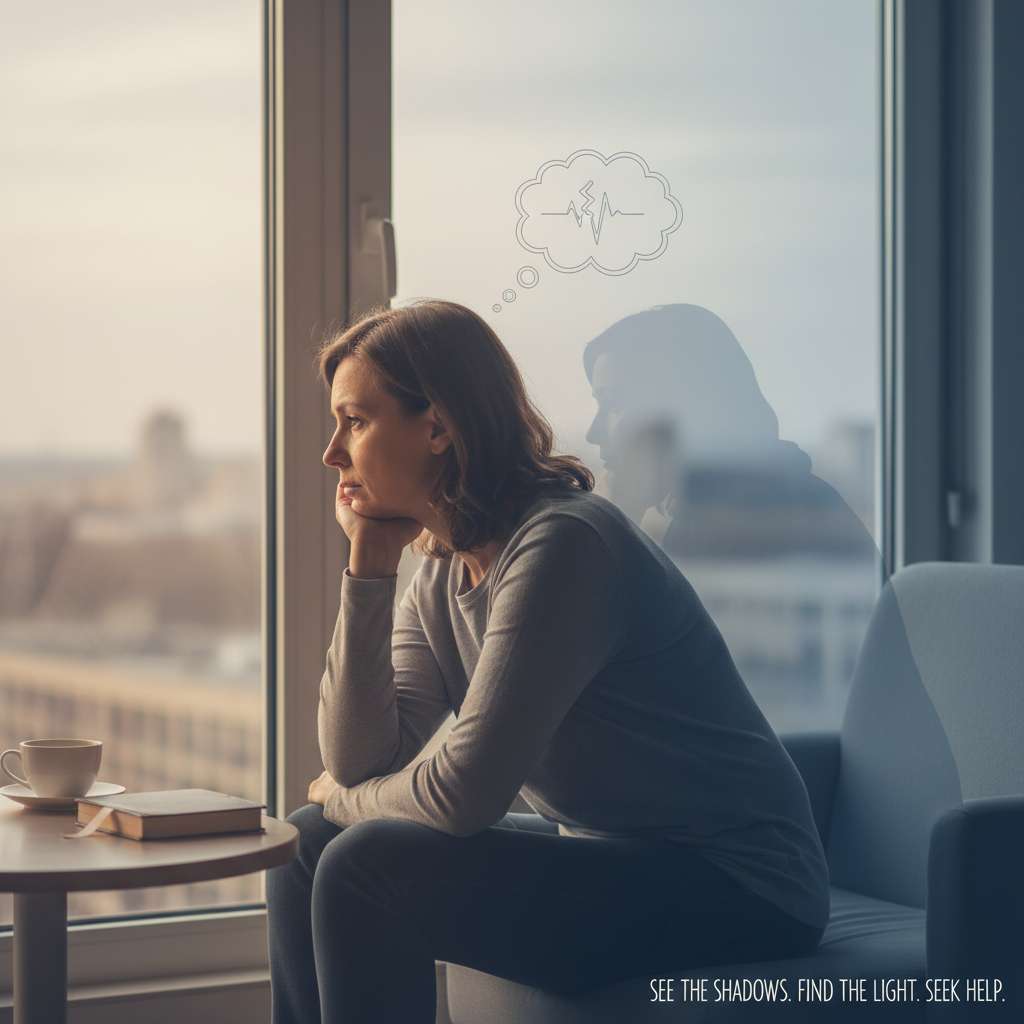
Recognizing the warning signs of depression in adults early can make a major difference in how quickly you or someone you love gets help. Depression is more than a temporary low mood. It is a mood disorder that affects how you feel, think, and function day to day, often interfering with work, relationships, and physical health [1].
When you understand what to look for, you are better prepared to decide when to seek professional support and how to talk about what you are noticing.
Understanding depression in adults
Depression in adults is common and treatable. In 2021, an estimated 14.5 million U.S. adults experienced at least one major depressive episode with severe impairment in the past year [2].
You might think of depression as feeling sad all the time, but the condition can show up in different ways. Some adults feel down, empty, or hopeless. Others mainly notice fatigue, sleep problems, physical pain, or loss of motivation. Symptoms usually occur most of the day, nearly every day, and last at least two weeks [1].
Because depression often develops gradually, it can be hard to see clearly in yourself. Sometimes a partner, friend, or coworker notices changes first [3]. Paying attention to early shifts in mood, behavior, and physical health can help you act before symptoms become severe. You can explore broader patterns in mental health red flags in adults if you want a wider view.
Emotional warning signs you might notice
Emotional symptoms are often what people associate with depression, but they can be more varied than simple sadness. You might notice your emotional world becoming narrower, heavier, or more negative over time.
Common emotional warning signs of depression in adults include feeling:
- Sad, down, or “low” most of the day
- Hopeless about the future or your ability to change things
- Irritable, easily frustrated, or “on edge”
- Empty, numb, or detached from your own life
- Guilty or ashamed, even when you have not done anything wrong
- Worthless or like a burden to others
You might catch your thoughts drifting toward harsh self-criticism or a constant sense of failure. Adults with depression often report persistent negative thoughts and difficulty seeing positive aspects of their lives [1].
If you notice these feelings most days for more than two weeks, and they are affecting how you function, it is time to take them seriously. Comparing what you are feeling to other conditions, such as the difference between stress and mental illness, can also clarify what is going on.
Changes in thinking and concentration
Depression affects your ability to think clearly and stay focused. You may feel mentally “slowed down” or foggy, even when you are trying to concentrate.
Cognitive warning signs of depression in adults can include:
- Trouble focusing on tasks you used to handle easily
- Forgetting appointments, deadlines, or details more often
- Taking much longer to make simple decisions
- Distractibility and difficulty following conversations
- Persistent negative, pessimistic thinking
These changes often show up at work or school as reduced productivity or more frequent mistakes [2]. If you have noticed a clear shift from your usual level of functioning, especially along with mood changes, depression could be part of the picture. For a broader view of how these shifts fit into other conditions, you can review how to identify behavioral health issues.
Physical symptoms you might overlook
Depression affects your body as well as your mind. This can be confusing, because many adults first seek help for physical complaints without realizing they are related to mood. In a large World Health Organization study, nearly 70% of patients who met criteria for depression reported only physical, or “somatic,” symptoms, such as pain, fatigue, or digestive issues, as their reason for seeking care [4].
Physical warning signs of depression in adults can include:
- Persistent fatigue or low energy, even after resting
- Sleep problems, such as insomnia, early waking, or sleeping much more than usual
- Changes in appetite or weight, either increased or decreased
- Headaches or migraines that become more frequent
- Increased sensitivity to pain, including joint, limb, or back pain
- Stomach upset, constipation, or other gastrointestinal issues
Depression can disrupt nearly all aspects of physical health, including sleep patterns, bone health, and sex drive, in part because serotonin influences both mood and bodily functions [5]. Lower levels of serotonin and changes in stress hormones such as cortisol have been linked to depressive symptoms in adults [5].
If you find yourself with multiple unexplained physical complaints that do not respond to usual medical treatment, it may be worth considering whether mood is also involved, especially if you recognize other emotional or behavioral changes.
Behavioral changes and loss of interest
One of the clearest warning signs of depression in adults is a noticeable change in what you do day to day. You might pull back from activities and relationships that once mattered to you, or struggle to complete routine responsibilities.
Behavioral signs to pay attention to include:
- Withdrawing from friends, family, or social events
- Losing interest in hobbies, work projects, sex, or activities you once enjoyed
- Struggling to keep up with household tasks or personal hygiene
- Calling in sick more often or missing deadlines at work
- Avoiding calls, messages, or invitations
Adults with depression in one study reported lower levels of physical activity, more sick days, and poorer self-care, including oral health problems such as dry mouth and dental sensitivity [6]. These behavioral shifts are not about laziness. They reflect how depression drains motivation and energy.
If you are unsure whether your changes point to a larger issue, it may help to explore other behavior changes linked to mental illness to see how your experience compares.
Appetite, sleep, and energy shifts
Changes in basic body rhythms are common in depression. You might notice that your sleep, appetite, and energy look very different than they used to. These shifts are often among the earliest and most persistent symptoms.
Typical patterns in adults with depression include:
- Sleeping too little, with trouble falling or staying asleep
- Waking very early and being unable to get back to sleep
- Sleeping much more than usual, but still feeling tired
- Eating far less than usual, with reduced appetite and weight loss
- Eating more, especially comfort foods, with weight gain
Depression in women can sometimes show atypical features, such as increased appetite and more sleep, instead of the more common pattern of reduced appetite and insomnia [2].
If you recognize sustained changes in sleep or appetite along with mood or energy problems that last most of the day, nearly every day, for more than two weeks, these are strong warning signs that go beyond ordinary stress [1].
Social withdrawal and relationship strain
Depression can slowly pull you away from people, even those you care about deeply. You might feel too tired to talk, guilty for not being “more positive,” or convinced that others do not want to be around you.
Social warning signs of depression in adults include:
- Spending much more time alone than usual
- Turning down invitations you used to accept
- Feeling disconnected or “numb” in relationships
- Becoming more irritable or impatient with loved ones
- Arguing more often or avoiding conflict completely
Over time, this withdrawal can increase loneliness and stress, which in turn worsen depressive symptoms. Adults with depression in one study reported higher levels of loneliness and perceived stress than non-depressed adults [6].
If you recognize these patterns in yourself or someone close to you, it may be helpful to learn how to tell if someone needs mental health help so you can approach the situation more confidently.
When depression affects physical health and pain
For many adults, pain and physical discomfort are central parts of depression. Chronic pain can increase the severity and duration of depressive episodes, and untreated depression can intensify the experience of pain.
Research has shown that:
- Adults with chronic painful conditions and depression tend to experience longer periods of depressed mood than those without chronic pain [4]
- Multiple physical complaints, such as pain, fatigue, and gastrointestinal issues, are strong predictors of underlying mood disorders [4]
- Painful physical conditions have been associated with increased suicidal thoughts in people with depression [4]
Even after emotional symptoms improve, residual physical symptoms like pain or fatigue can significantly increase the risk of relapse if they are not addressed [4].
If you live with chronic pain and have also noticed mood changes, it is important to mention both to your healthcare provider. Treating depression can sometimes reduce pain intensity and improve quality of life.
Differentiating depression from normal stress
Life stress, grief, and temporary low moods are part of being human. The challenge is figuring out when your experience has moved into clinical depression that would benefit from professional care.
You might be dealing with typical stress or sadness if:
- Your low mood is closely tied to a specific event and is gradually easing
- You still have moments of enjoyment and can be pulled into activities
- Your sleep, appetite, and energy are mostly stable
You are more likely facing depression if:
- Symptoms persist most of the day, nearly every day, for more than two weeks [3]
- Your functioning at work, home, or socially is clearly affected
- You feel stuck, hopeless, or unable to imagine things improving
Sometimes depression overlaps with other conditions, such as anxiety or substance use. Reviewing early symptoms of anxiety disorders and early signs of substance abuse can help you see whether multiple issues may be involved. You can also explore early warning signs of mood disorders for a broader context.
Substance use and depression: A hidden link
When you feel persistently low or stressed, turning to alcohol or drugs may seem like a way to cope. Over time, however, substance use can worsen depression or even trigger it in vulnerable people.
Warning signs that substance use and depression may be interacting include:
- Increasing use of alcohol or drugs to relax, sleep, or “numb out”
- Feeling more depressed after drinking or using substances
- Needing more of a substance to get the same effect
- Using substances even when they cause problems at work or in relationships
These patterns often develop gradually and can be easy to minimize. Understanding how addiction starts behaviorally and how behavioral health issues develop can help you see the connection between mood and substance use more clearly. If you are unsure what you are seeing, resources on how to recognize substance use problems early may also be helpful.
Red flag symptoms that need urgent help
Some warning signs of depression in adults require immediate attention. These symptoms signal a high level of risk and should never be ignored.
Seek urgent help right away if you or someone you care about:
- Talks about wanting to die or kill themselves
- Expresses feeling hopeless, trapped, or like there is no reason to live
- Mentions being a burden to others
- Starts giving away possessions or saying goodbye
- Shows sudden, extreme mood improvement after a period of severe depression, which can sometimes indicate a decision to act on suicidal thoughts
Adults with depression may experience thoughts of helplessness, hopelessness, or suicide [1]. These are medical emergencies, not signs of weakness. If you see or feel these signs, contact emergency services or a crisis line in your area, or go to the nearest emergency room.
For non-urgent but serious concerns, you can review mental health symptoms that should not be ignored and signs of worsening mental health to help you decide your next steps.
If you are in immediate danger or thinking about harming yourself, call emergency services or your local crisis hotline right away.
When to seek professional evaluation
You do not need to wait until symptoms are severe to ask for help. In fact, early support often leads to better outcomes and can prevent symptoms from becoming more disabling. Adults are encouraged to talk with a healthcare provider if depressive symptoms last most of the day, nearly every day, for more than two weeks [3].
A practical starting point is your primary care provider. You do not have to use the word “depressed.” You can describe changes like:
- “I have lost interest in things I used to enjoy.”
- “I am exhausted all the time and my sleep is off.”
- “I am more irritable and I am avoiding people.”
Primary care clinicians often manage depression treatment and can refer you to a therapist, psychiatrist, or other specialist as needed [2]. Screening tools, such as brief questionnaires that cover mood, sleep, appetite, and energy, can help clarify what you are experiencing [4].
If you are wondering whether therapy might be useful before things get worse, you can explore how to tell if therapy is needed and when to seek help for mental health for additional guidance.
How to talk with someone you are worried about
Noticing warning signs of depression in an adult you care about can be unsettling. You might worry about saying the wrong thing or making the person upset. Still, gently naming what you see can be an important first step toward help.
You can start by:
- Choosing a quiet time when you both have privacy
- Using “I” statements to share your observations, such as “I have noticed you seem more withdrawn and tired lately”
- Asking open questions like “How have you been feeling day to day?”
- Listening more than you speak, and avoiding quick fixes or criticism
It can also help to share that depression is common and treatable and that seeking help is a sign of strength, not a failure. Offering to help with practical steps, such as finding a provider or going to an appointment, can make it easier for the person to follow through.
If you are not sure how serious the situation is, resources on how to tell if someone needs mental health help and how to recognize emotional distress early may provide additional clarity.
Taking your next step
Recognizing the warning signs of depression in adults early allows you to respond with care rather than crisis. Whether you are noticing changes in yourself or in someone close to you, you do not have to figure it out alone.
If you see a pattern of persistent mood changes, physical symptoms, or behavior shifts that are affecting daily life, consider:
- Scheduling an appointment with your primary care provider or a mental health professional
- Sharing your concerns with a trusted friend or family member
- Learning more about early signs of mental health issues and mental health awareness symptoms
- Watching for other early signs of co occurring issues, such as anxiety or substance use
Depression is a medical condition that responds to treatment. With early recognition and the right support, improvement is possible, and you can move toward feeling more like yourself again.
References
- (Mayo Clinic)
- (Mass General Brigham)
- (NHS)
- (PMC – NCBI)
- (Cigna)
- (NCBI PMC)